
Color and the Contest for Life
The House of Bernarda AlbaThe play’s colors distinguish the daughters’ vitality and desire from the black mourning that Bernarda imposes upon them.
increasing Bearing strength in each event
 decreasing
Bearing strength in each eventdecreasingBlack at the Funeral
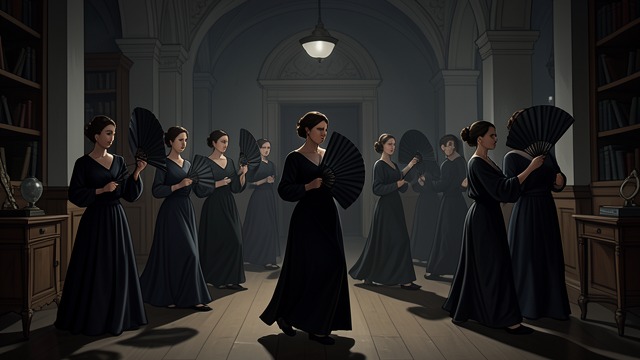
Black at the Funeral
A Visual Uniform
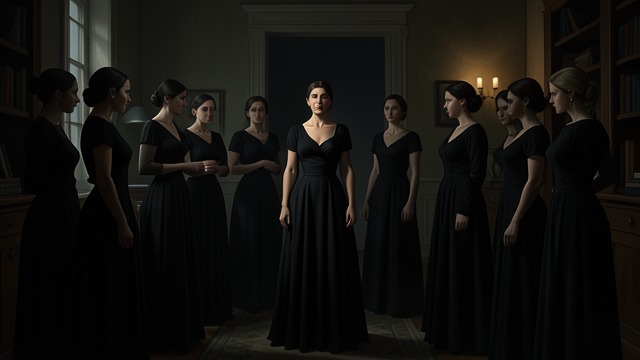
The women enter in mourning clothes and carry black fans. The dark palette makes bereavement visible as a collective social expectation.
A Future Imposed
Black becomes more than clothing for a funeral; it anticipates the daughters’ years of enforced mourning. Their appearance is regulated along with their movement.
The Green Dress Rejected
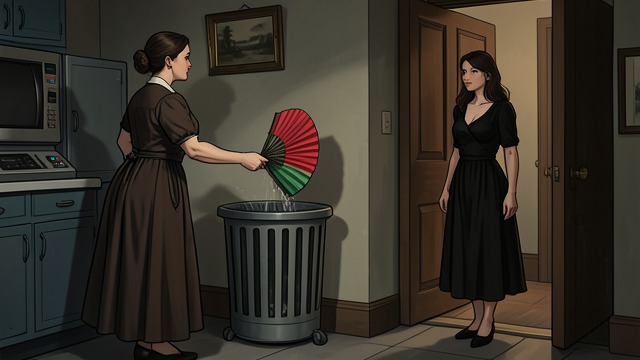
The Green Dress Rejected
Color Against Mourning
Adela offers Bernarda a fan decorated with red and green flowers. Bernarda throws it away and orders a black one appropriate to mourning.
A Small Conflict Made Visible
The colors connect Adela to energy and passion that the house excludes. Bernarda’s rejection makes her attempt to control even the symbols of feeling.
Adela’s Green Appearance
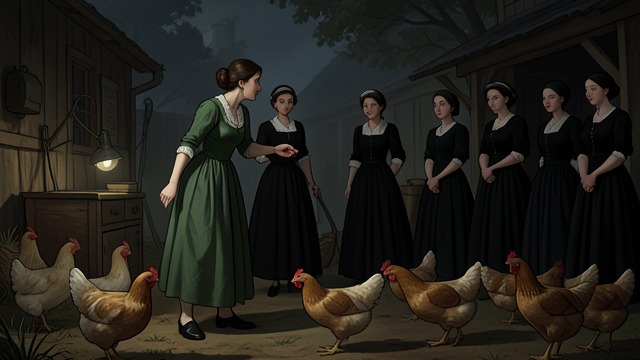
Adela’s Green Appearance
Vitality in the Yard
Adela wears her green dress in the stable-yard and calls to the hens. The color and action set her apart from the sisters’ black mourning clothes.
A Life Not Yet Submitted
Magdalena recalls the episode with amusement and tenderness. Adela’s playful self-display gives visible form to her refusal to disappear into the household.
White in the Night
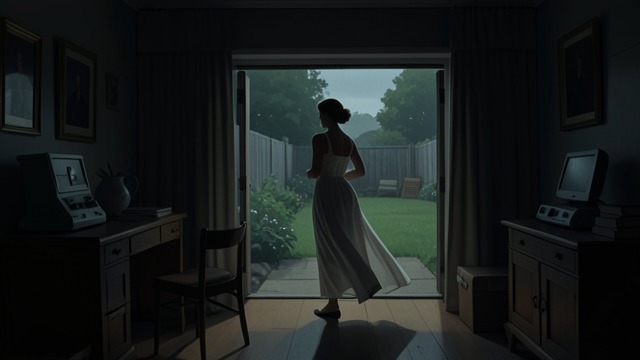
White in the Night
A Bright Figure
Adela appears in a white petticoat and bodice against the nearly dark stage. Her clothing makes her presence conspicuous as she moves toward the yard.
Vitality and Risk
White contrasts with the family’s black mourning but cannot guarantee purity or protection. The image brings her bodily desire into the open just before discovery.
Black Restored
Black Restored
Mourning Reasserted
Bernarda orders a new period of mourning after Adela’s death. The household is returned to the dark public appearance that Adela had resisted.
Color as Closure
The ending offers no visible future of release. Mourning absorbs the daughter’s revolt and imposes the family’s old visual order once more.
Act One, during the mourners’ entrance
Act One, after Bernarda requests a fan
Act One, after the sisters discuss the hens
Act Three, after the servants leave
Act Three, after the body is found
